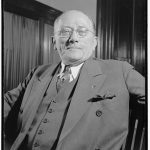
72-year-old Leonard Mack holds the unfortunate record of having the longest wrongful conviction in U.S. history overturned by DNA evidence. It took Leonard Mack five decades to prove his innocence for a crime he didn’t commit.
Early Life and Military Service
Born in 1951 in Columbia, South Carolina, during the Jim Crow era, Mack faced severe racial discrimination. After dropping out of high school, he enlisted in the military in 1968 to escape the racism and continue his family’s legacy. Mack’s military service was marked by racial confrontations and a significant back injury.
The Incident and Wrongful Conviction
In May 1975, two high school girls were attacked on their way home from school in Greenburgh, New York. The police received a description of their attacker, and two hours later, they stopped Leonard Mack, a 23-year-old Black Vietnam War veteran. Despite not matching the description given by the teens, except for being Black, wearing a hat, and having a gold earring, Mack was arrested.
Mack told the police he was with his girlfriend and had nothing to do with the crime, but the police didn’t care. They brought one of the teens to where they had arrested Mack. When she arrived, Mack was in handcuffs and surrounded by police officers. The police asked her if Mack was her attacker, and she said he was. This was a classic case of suggestive identification, often leading to false identifications.
Mack was later identified by the other teen, who was legally blind, at the police station. The police brought her into a room where she was told by her friend that Mack was their attacker, to which she agreed.
Trial and Conviction
Mack went to trial in 1976. Three alibi witnesses testified that Mack was with them at the time of the attack, including two mechanics who stated he was at their shop getting his car worked on. Additionally, a forensic scientist testified that Mack’s blood type did not match the biological evidence obtained. Despite this, Mack was convicted and sentenced to seven and a half to fifteen years in prison. He was released on parole in 1982 but lived as a convicted felon for 40 years, carrying a badge of shame that didn’t belong to him.
DNA Evidence and Exoneration
In 2019, prosecutors reopened Mack’s case and tested the DNA obtained from the victim 40 years prior. The DNA matched a man who had been convicted of similar crimes multiple times. This man later confessed to committing the crime for which Mack spent five decades paying. Due to the statute of limitations, this man was never prosecuted for the crime he let Mack sit in prison for.
In August 2023, 48 years after his conviction, Leonard Mack was declared innocent, and his conviction was vacated. Leonard Mack lost five decades of his life to incarceration, shame, and ridicule because of a flawed police investigation and a criminal justice system too ready to imprison a Black person for a crime they didn’t commit.
Mack now advocates for veterans, particularly those wrongfully convicted. He emphasizes the importance of exonerees supporting one another, understanding the unique struggles they face.
Celebrating Resilience
Leonard Mack’s story is a testament to resilience, hope, and the importance of justice. His wrongful conviction highlights systemic flaws and racial bias in the criminal justice system. Since 1989, over 3,000 wrongfully convicted people have been exonerated, with over 50% being Black. Many more remain behind bars, awaiting justice. On this Veteran’s Day, we honor Leonard Mack and all veterans who have served their nation with honor and sacrifice. Mack’s story serves as a powerful reminder of the need for ongoing reform and advocacy in the pursuit of true justice.