Lynching Was a Political Weapon
Lynching was more than just racial violence—it was a tool of political suppression. As Black Americans fought for their right to vote in the early 20th century, white supremacists used terror to keep them from the ballot box. While legal barriers like poll taxes and literacy tests were created to prevent Black political participation, lynching served as the ultimate enforcement mechanism. Those who resisted voter suppression or advocated for political rights were often met with brutal violence.
The Poll Tax: A Financial Barrier to Democracy
The poll tax was one of the most effective tools for disenfranchising Black voters. By requiring individuals to pay a fee to vote, southern lawmakers ensured that many Black citizens—especially sharecroppers and low-wage workers—were excluded from elections. This was not just about money; it was about maintaining white political power and ensuring that Black people remained voiceless in government.

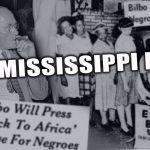
When efforts to abolish the poll tax gained momentum in the 1940s, segregationist politicians fought back aggressively. Mississippi Senator Theodore Bilbo was one of the loudest voices against federal voting rights protections. He and others framed the poll tax as a defense of white supremacy, warning that removing it would lead to Black political control

Lynching and the Poll Tax Debate
The fight over the poll tax was not just in Congress—it played out in the streets and the backroads of the South. As federal lawmakers debated ending the poll tax, racial violence escalated.
One of the most striking examples was the lynching of Ernest Green and Charlie Lang in 1942. As the Senate debated an anti-poll-tax bill, Green and Lang—two Black teenagers in Mississippi—were dragged from jail by a mob and lynched. Black newspapers called it the first shot in a white backlash against Black political empowerment, making it clear that lynching was being used to reinforce voter suppression.
Mississippi’s white leaders saw the poll tax as an essential tool for keeping Black citizens out of politics. White newspapers and politicians defended both the tax and racial violence as necessary to preserving their way of life. Even Mississippi’s governor framed federal voting rights efforts as a dangerous attack on white political control, fueling tensions that erupted into violence.
The Message Behind Racial Terror
Lynchings like Green and Lang’s were not just about punishing individuals—they were a public warning to all Black citizens:
If you try to assert your rights, this could happen to you.
This was how white supremacists enforced political suppression. Through the threat of death, they created an atmosphere of terror that discouraged Black civic engagement.
The Lingering Impact of Political Violence
The consequences of lynching as a political tool were long-lasting. Many Black citizens, knowing the dangers of activism, chose not to register to vote, not because they did not want to, but because they feared for their lives and their families.
Even after the poll tax was formally abolished, other forms of voter suppression—intimidation at the polls, literacy tests, and grandfather clauses—continued to be enforced through the same racial terror that fueled lynching.
Why This History Still Matters
Lynching as a political weapon did not disappear—it evolved. Today, voter suppression takes new forms: strict voter ID laws, polling place closures in Black communities, and gerrymandering that dilutes Black political power. Understanding the connection between lynching and political suppression is crucial to recognizing how racial violence and disenfranchisement continue to shape America’s democracy.
The fight against the poll tax was not just about money—it was about power. And those in power have always used whatever means necessary, including violence, to keep it. Recognizing this history ensures that we do not allow new forms of suppression to take hold.
The best way to honor those who suffered under racial terror is to continue fighting for the rights they were denied. The right to vote should never be a privilege reserved for a few—it should be a guarantee for all.
Learn More About These Cases
These stories are part of a larger history of racial terror in America—one that cannot be forgotten. If you want to learn more, we’ve covered these cases in detail in our in-depth video series. Check them out to see the full scope of what happened and why it still matters today. Understanding history is key to preventing its repetition, so we encourage you to watch, share, and continue the conversation.