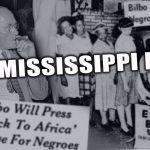
This is an important story, one that almost no one knows about. It happened so long ago that it’s all but been forgotten. But this story is crucial because it offers a glimpse into the harsh realities Black people faced in a time when they were utterly unprotected. The story of the Black woman you’re about to learn about must be shared. Her pain and suffering were real, and the injustice she endured left scars that lasted a lifetime. Though just one of thousands, her story deserves to be remembered.
This story also serves as a stark reminder of the systemic racism that was woven into the fabric of American society, particularly in the Jim Crow South. It reflects the deep-rooted prejudices that not only allowed but often encouraged acts of violence and oppression against Black people, especially Black women. The injustice suffered by Martha McMillan is a chilling example of how racism and power dynamics were weaponized to terrorize and control Black communities. The echoes of these injustices reverberate through history, reminding us of the pain and trauma endured by countless individuals who, like Martha, were victims of a society that denied them their humanity.
Background on Martha McMillan
Martha Kendrick was born in 1913 in the heart of Alabama, a state deeply entrenched in the legacy of slavery and segregation. Her parents, Tom Kendrick and Martha Lane, were the children of formerly enslaved Black people, and like many Black families in the South, they worked as farmers. Martha grew up in a world where the color of her skin determined the opportunities available to her. Despite the odds, she managed to attend school up to the 8th grade in a segregated system designed to keep Black people uneducated and subservient.
In 1931, at the age of 18, Martha married Mal McMillan. Mal was born in 1904 in Bullock County, Alabama, to William and Sallie McMillan. He would later become a respected Baptist preacher, a role that carried significant weight within the Black community. Together, Martha and Mal built a life in Union Springs, Alabama, a small town where everyone knew each other’s business. By 1946, the couple had eight children, and while Mal focused on his pastoral duties, Martha worked tirelessly to support her family. She took on various jobs, including working as a bus attendant and a part-time maid for Margaret Green Cook and her husband, Reynolds Cook, one of the more affluent white families in Union Springs.
Martha’s life, like that of many Black women of her time, was marked by hard work and sacrifice. She juggled multiple roles—wife, mother, worker—while navigating the dangerous waters of a racially divided society. Her work for the Cook family, while providing much-needed income, placed her in a precarious position, subjecting her to the whims and prejudices of her employers. In the South, where the mere accusation from a white person could lead to dire consequences for a Black person, Martha’s position was perilous.
The Accusation and Initial Assault
The events that would forever alter Martha’s life began on a seemingly ordinary day. Jewelry belonging to the Cook family went missing, and without hesitation, Martha was accused of theft. The Cook family, embodying the racist attitudes of the time, quickly pointed fingers at the Black woman who worked in their home, rather than considering any other possibility. For them, it was unthinkable that a white person could be involved in such a crime.
On the evening of September 5, 1946, the situation escalated into something far more sinister. While Reverend Mal McMillan was away attending a Baptist convention in Atlanta, Sheriff Joseph Pickett, along with Reynolds Cook and his brother Rell Green, forcibly entered Martha’s home. This intrusion occurred while Martha was at home with her eight children, a terrifying situation for any mother. The men, fueled by their racist assumptions and a desire to assert their power, demanded to know where the missing rings were. Martha, who had no knowledge of the stolen items, was confused and frightened. She repeatedly told them she knew nothing about the jewelry, but her protests fell on deaf ears.
In their search, the men ransacked Martha’s home, upending her life in an instant. When their search yielded nothing, frustration turned into violence. Rell Green, in a fit of rage, kicked Martha in the face with such force that it loosened her teeth. The brutality of this act was compounded by the fact that it took place in front of her children, who were powerless to intervene. Green’s kick was not just an assault on Martha’s body; it was an attempt to break her spirit, to remind her of her place in a society that devalued her humanity. Despite the pain and fear, Martha continued to maintain her innocence, a testament to her strength and dignity in the face of overwhelming adversity.
Unsatisfied with her responses and fueled by their own sense of impunity, the men decided to escalate the situation further. They arrested Martha and took her to the Union Springs Jail, where the real nightmare would begin.
The Brutal Beating in Jail
The Union Springs Jail became the setting for an unimaginable act of cruelty. Upon her arrival, Martha was thrown into a small, dark cell, isolated from anyone who might offer her comfort or aid. The walls of the cell, usually meant to contain criminals, now enclosed an innocent woman who had committed no crime. But in the Jim Crow South, innocence was often irrelevant for Black people, especially for those who dared to stand their ground.

Sheriff Pickett, along with the Green brothers and Reynolds Cook, followed Martha into the jail. What transpired next was nothing short of a vicious attack on her personhood. While Sheriff Pickett stood watch outside the cell, the Green brothers and Reynolds Cook unleashed a torrent of violence upon Martha. They beat her with their fists, their rage growing with each unanswered question about the missing rings. Martha’s cries for help, her pleas for mercy, went unheeded. In their eyes, she was nothing more than a Black woman who needed to be put in her place.
Sheriff Pickett, who should have been upholding the law, instead facilitated this brutal assault. He left the cell and returned with a four-foot-long rubber hose, which he passed through the cell bars to Rell Green. Green took the hose and began to beat Martha with it, delivering blow after blow across her face, shoulders, and arms. The pain was excruciating, but Martha remained resolute, continuously asserting that she had not stolen the rings. Her resistance, however, only seemed to fuel their anger.
When the hose finally wore down from the repeated strikes, the men didn’t stop. They continued to beat Martha, this time using their fists and other objects they found in the cell. At one point, they pointed a weapon at her, threatening to end her life if she didn’t confess. But Martha had nothing to confess. The rings were never in her possession, and no amount of violence could change that fact. The beating continued until the men were too tired to inflict more harm, leaving Martha bloodied, bruised, and broken on the cold cell floor.
The brutality of this assault was not just an attempt to force a confession; it was a demonstration of power. It was a message to Martha and every other Black person in Union Springs that their lives were disposable, that their dignity could be stripped away at any moment.
The Aftermath of the Beating
After hours of relentless torture, the men decided to release Martha. But her ordeal was far from over. They dragged her out of the jail, her body battered and her spirit shaken, and forced her into a car. As they drove her home, Comer Green issued yet another threat. He told Martha that if she didn’t tell them where the rings were, they would hang her from a tree, lynch her, and leave her body for the buzzards to eat. This threat of lynching was not an idle one; it was a real and terrifying possibility for Black people in the South. Lynching was a tool of terror used to enforce white supremacy, and the mere mention of it was enough to instill fear in anyone.
Martha, however, remained steadfast in her truth. She told them that they would have to kill her because she had nothing to confess. This act of defiance, even in the face of death, was a powerful assertion of her dignity and her refusal to be broken by their cruelty. Martha’s resilience in this moment is a testament to her strength, even as her body bore the physical marks of their brutality.
When they finally dropped her off at home, Martha was barely able to stand. Her children, who had witnessed the initial assault and now saw their mother return in such a state, were traumatized. The fear and helplessness they felt would stay with them for the rest of their lives. Martha, despite her own suffering, had to reassure her children, telling them to remain quiet about what had happened. She knew that any attempt to seek justice could result in further violence or even death for her and her family.
The Continued Threats
The days following the beating were filled with fear and uncertainty for Martha and her family. They knew that the threat of further violence loomed over them like a dark cloud. Six days after the brutal beating, on September 11, 1946, Mrs. Cook and her brother Comer Green returned to Martha’s home. They told Martha that they would arrest and beat her again if she did not find the rings in 24 hours.
The Legal Battle and Lack of Justice
Despite the overwhelming evidence of the violence she had endured, Martha’s pursuit of justice would prove to be an uphill battle. In a world where the legal system was designed to protect the interests of white people, particularly those of the upper class, Martha faced an almost insurmountable challenge in seeking accountability for the wrongs done to her.
The next day, Martha and her husband took a train to Montgomery to talk to a white lawyer about what they should do. They wanted justice but didn’t know where to turn. Remember, this was 1946 in Alabama in the Jim Crow era. What happened to Martha happened every day to a Black person somewhere in the Jim Crow South. The lawyer knew what happened to Martha was wrong and against the law. He told Martha and her husband that they should contact the local authorities and report what happened.
Martha and her husband went to the Alabama Department of Public Safety. Martha spoke with Captain N.W. Kimbrough. He was the head of the Enforcement Division. Martha told him what happened and signed an affidavit detailing exactly what happened and how she was beaten by the Sheriff and the Cook family. Captain Kimbrough took photos of Martha’s injuries and then took her to the Federal Prosecutor’s office where he told U.S. Attorney E. Burns Parker what happened. Burns said that he’d never seen anyone so beat up before. The U.S. Attorney’s office asked the FBI to open an investigation into what happened to Martha.

Soon after that, the FBI began investigating what happened. They spoke to Sheriff Pickett, Rell Green, and Reynold Cook and took their statements. Each of them denied what happened. They even had witnesses back them up and said that they did not harm Martha. But the FBI had witnesses to corroborate what happened to Martha. They spoke to Martha’s 14-year-old son, He said that on the night of the incident, Sheriff Pickett came to the home with two other men. They came in and looked around and then kicked his mother in the face. He said that his mother fell back on the bed after being kicked and he saw her mouth bleeding. He said that they took his mother, and when she came back the next morning, he saw her bruises and saw her eyes closed and both of her arms badly bruised. He said his mother told the family not to tell anyone about what happened.

The trial, which took place in the deeply segregated and racist courtrooms of Alabama, was a travesty of justice. From the outset, it was clear that the deck was stacked against Martha. The all-white jury, the biased judge, and the community’s deep-seated racial prejudices made it nearly impossible for a fair trial. Despite the testimony of witnesses who confirmed the brutal beating and threats against Martha, the jury was unmoved. In their eyes, the word of a Black woman held little weight against that of white men.

The verdict was predictable. The accused were acquitted of all charges. The jury’s decision sent a clear message that the lives of Black people, especially Black women, were not valued. It reinforced the idea that white people could act with impunity, their actions shielded by a legal system designed to uphold white supremacy.

For Martha, the outcome of the trial was devastating but not entirely surprising. She had fought as hard as she could, but the forces arrayed against her were too powerful. The injustice she experienced in that courtroom was a bitter reminder of the harsh realities of life for Black people in the Jim Crow South.
The Aftermath of Injustice
The events that unfolded in the aftermath of the Jim Crow era did more than just devastate the lives of Martha and Mal McMillan; they left an indelible mark on their family, altering the course of their lives in ways that no one could have foreseen. The horror of Martha’s brutal beating and the subsequent trial, which ended in the acquittal of her attackers, was a turning point that would forever haunt the McMillan family. While the immediate physical wounds may have healed, the psychological scars remained, deepening with each passing year.
It’s unclear exactly what led to their separation, but records indicate that the couple eventually parted ways. Perhaps it was the overwhelming guilt that Mal carried, knowing he couldn’t protect his wife from the violence and humiliation she endured. Or maybe it was the unspoken pain that lingered between them, a constant reminder of the brutality they faced and the powerlessness they felt. Whatever the reasons, Martha and Mal went their separate ways, each carrying the weight of their shared trauma.
A New Chapter for Martha
After the separation, Martha moved to Indiana, seeking a fresh start. She remarried a man named Douglas Williams, and together they opened a flower shop.
In August 1975, Martha passed away at the age of 62. Her death marked the end of a life filled with hardship, but also a life defined by an incredible strength of spirit. Just five months later, in January 1976, Mal McMillan also passed away, dying at the age of 72. Their deaths brought to a close the story of a couple who had been through so much together, yet had been torn apart by the cruel forces of racism and injustice.


The Tragic Fate of Doris and Lynda
While Martha and Mal’s story ended, the legacy of their suffering continued to haunt their family. One of their daughters, Doris, found herself entangled in a life of hardship and violence. In 1972, Doris and her 19-year-old daughter, Lynda, were tragically killed in Gary, Indiana. Their lives were brutally taken as a result of gang violence, a grim reflection of the chaos that had engulfed the city at the time.

Doris had become involved in selling narcotics, a desperate attempt to support her daughter and put Lynda through college. It was a choice born out of necessity, a dangerous gamble and this path brought Doris into conflict with a local crime organization known as “The Family.” When Doris refused to pay a $500 franchising fee demanded by the gang, they retaliated with deadly force, invading her home and murdering both her and Lynda.

This senseless act of violence was not just a random tragedy; it was a direct consequence of the systemic racism and inequality that had plagued the McMillan family for generations. Doris, who had watched her mother be brutalized and then denied justice, was herself a victim of a society that had offered her few choices and even fewer chances at redemption.
The Lingering Questions
The tragic deaths of Doris and Lynda force us to confront some difficult questions. What would have happened to the McMillan family if Jim Crow and segregation had not destroyed their lives in 1947? What if Mal had been able to protect his wife and their children from the violence inflicted upon them? Would Mal and Martha have stayed together, their marriage unbroken by the weight of their shared trauma? And what of Doris and Lynda? Would they have been in Gary, Indiana, struggling to survive in a world that seemed determined to crush them, if Doris had not been scarred by the memories of her mother’s brutalization and the failure of the justice system to hold her attackers accountable?
These are questions we will never have answers to, but they are worth asking. They remind us that the consequences of racism and injustice are not confined to a single moment or a single generation. The pain that racism causes does not simply disappear; it echoes through the lives of those who are left behind, shaping their choices and their fates in ways that are both tragic and profound.
The Enduring Impact of Jim Crow
The story of the McMillan family is a reminder of the enduring impact of Jim Crow and the systemic racism that defined life for Black Americans during that era. Jim Crow didn’t just win in 1947 when it allowed Sheriff Pickett and the Cooks to beat Martha and then walk free. Jim Crow won again and again, each time racism destroyed a Black family’s future, each time it stripped away their dignity, their safety, and their hope.
The violence that claimed Doris and Lynda’s lives in 1972 was not an isolated incident. It was the result of a society that had long devalued Black lives, a society where systemic racism created a cycle of poverty, violence, and despair that was nearly impossible to escape. The McMillan family, like so many other Black families, was caught in this cycle, their lives shaped by the forces of racism that had been set in motion long before they were born.
The pain of racism is not something that can be easily forgotten or overcome. It lingers, not just in the memories of those who experienced it firsthand, but in the lives of their descendants, in the communities that were torn apart by it, and in the very fabric of our society. The story of Martha, Mal, Doris, and Lynda is a powerful reminder of this truth.
As we remember their lives and the tragic events that shaped them, we must also remember the countless other Black families who have suffered similar fates. We must confront the history of racism and injustice in our country, not just as a matter of historical record, but as a living legacy that continues to affect us all. Only by doing so can we begin to heal the wounds of the past and work towards a future where the tragedies that befell the McMillan family are no longer possible.