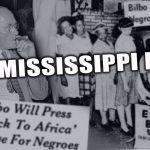
Lynching in America was never just about punishment. It was about power. It was about control. And no state wielded that power more brutally than Mississippi. With the highest recorded number of lynchings in U.S. history, Mississippi became infamous for its relentless racial terror.
The Early Days: When Lynching Wasn’t for Black People
Before the Civil War, lynching was rarely used against Black people. Enslaved individuals were considered property, and killing someone’s property meant financial loss. Instead, lynching was primarily a form of vigilante justice used against white people accused of crimes. But after emancipation, everything changed. With Black people no longer “belonging” to white owners, lynching transformed into a distinctly racialized tool of terror.
Mississippi’s Culture of Lynching

After the Civil War, lynching in Mississippi became commonplace. One historian described it as being characteristic of society itself. In the years immediately following emancipation, an estimated two to three Black men were lynched every day in the state. The violence was so rampant that there are no reliable numbers to measure exactly how many were murdered between the end of slavery and 1890.
By 1962, at least 538 Black people had been lynched in Mississippi—the highest number in the nation. Georgia and Texas came close, but Mississippi stood as the most notorious. It wasn’t just the raw numbers—it was the fact that Mississippi led in every single category of lynching.
Mississippi Ranked First in Every Category of Lynching
Mississippi wasn’t just the worst—it was the worst in every way:
- The most overall lynchings
- The most multiple lynchings (groups of victims killed at the same time)
- The most lynchings per capita
- The most female lynching victims
- The most victims taken directly from police custody
- The most lynchings where no one was ever arrested or convicted
- The most public support for lynching
The numbers weren’t just statistics—they told the story of a state completely committed to racial violence.
The Brutality of Mississippi Lynchings

Lynching in Mississippi wasn’t just about hanging. It wasn’t just about shooting. It was about making a spectacle of Black death. From 1882 to 1945, Mississippi recorded:
- 42 double lynchings
- 8 triple lynchings
- 6 quadruple lynchings
- 3 quintuple lynchings

But what set Mississippi apart was the brutality of these lynchings. Black people weren’t just killed—they were tortured. Mississippi lynch mobs burned victims alive, used blowtorches on their bodies, mutilated them with hot irons, drowned them, and dragged them behind cars. At least 15 Black people were publicly burned to death in the state. The violence was as much about making an example as it was about killing.
One of the most horrifying examples was the lynching of L.Q. Ivy in 1925. A hardworking Black teenager, L.Q. was falsely accused, hunted down, and burned alive by a white mob. His case represents just one of the many instances where an accusation alone was enough to seal a Black person’s fate. To learn more about his story:
No Consequences: Why Lynch Mobs Thrived in Mississippi

Unlike other states where some white men were occasionally prosecuted for participating in lynchings, no one in Mississippi was ever held accountable.
A Mississippi newspaper once described white lynchers as the “offspring of royalty”—untouchable men who were beyond the reach of law and scrutiny. This was the reality of Black life in Mississippi: at any moment, a Black person could be accused, hunted down, tortured, and killed, and there was absolutely nothing they or their families could do about it.
Economic and Political Power: The True Threat Behind Lynchings
Lynching in Mississippi wasn’t just about enforcing white supremacy through violence—it was also about protecting white economic and political power. Black men who gained wealth, owned land, or became politically active were seen as threats. Their success challenged the racial order, and white mobs responded with terror.
In regions where Black people had a foothold in politics, lynching rates soared. White supremacists used violence as a tool to dismantle Black political participation, ensuring that economic and governmental control remained in white hands. The Yazoo Delta, where Black political activity was strongest, saw some of the worst racial violence in the state.
Even beyond politics, white mobs targeted Black individuals who were financially successful or independent. The fear wasn’t just about racial hierarchy—it was about ensuring that Black economic prosperity never posed a challenge to white dominance.
The National Shame of Mississippi
Mississippi’s reputation became an embarrassment—even to white politicians who supported segregation. In Congress, lawmakers who opposed federal anti-lynching laws often struggled to justify Mississippi’s staggering numbers. Every attempt to pass anti-lynching legislation was met with fierce resistance, especially from Southern politicians who insisted that the federal government had no right to intervene in “state matters.”
But Mississippi’s brutality kept the pressure on. Every time an especially gruesome lynching made headlines, the call for federal intervention grew louder. Yet, despite more than 100 anti-lynching bills introduced in Congress, not one was ever passed. Mississippi remained a state where white men could lynch with impunity.
The Legacy of Terror
Mississippi’s history of lynching left deep scars that still resonate today. The culture of impunity, racial violence, and white supremacy that allowed lynching to flourish didn’t simply disappear. It evolved—into segregation, into mass incarceration, into racial violence that persists in different forms.
Lynching was not just an act of murder. It was a message. And Mississippi made sure that message was heard loud and clear.
L.Q. Ivy was one of hundreds of Black people lynched in Mississippi. His story, like so many others, is a painful reminder of the state’s dark legacy. But history cannot be erased. And we will not forget.