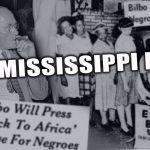
In the Jim Crow South, the courtroom was not a place of refuge for Black women and girls—it was another battleground. Time and again, white men accused of harming Black victims were allowed to walk free, thanks to a system designed to protect them. Not through overt declarations of innocence, but through procedural delay, jury manipulation, and reduced charges that quietly removed accountability from the equation.
This wasn’t an accident. It was the system functioning exactly as intended.
The Tools of Evasion: Mistrials and Jury Nullification
One of the most common legal tactics used to protect white men was the mistrial. When jurors couldn’t reach a unanimous verdict—often due to racial bias—the court would simply declare a mistrial, leaving victims in limbo. Sometimes, as seen in multiple cases throughout the 1940s and 1950s, this was followed by a second trial. But juries made up entirely of white men often returned acquittals, even when evidence and testimony were clear.
Jurors would also engage in jury nullification—where jurors acknowledge a defendant’s guilt but refuse to convict—was quietly encouraged in cases involving Black victims. This allowed white communities to maintain the illusion of legal process while ensuring no actual punishment.
The Lesser Charge Loophole
When juries or judges couldn’t stomach convicting a white man for a serious offense against a Black woman or girl, they often turned to lesser charges. Instead of convicting on charges of assault, violation, or attempted murder, prosecutors would reduce the charge to something less threatening—such as kidnapping or statutory rape offense. These lesser charges carried shorter sentences and gave the public a sense that “something” had been done, while ensuring the white defendant wouldn’t face serious consequences.

This tactic was used in multiple cases throughout the South. A notable example in 1951 involved two white men accused of abducting and assaulting a 30-year-old Black woman in Mississippi. The jury refused to convict on the primary charge. The men were later charged and convicted on the lesser charge of kidnapping. A charge that did not carry life in prison or the death penalty.
How the System Failed Black Girls
The courtroom rituals—indictment, testimony, jury deliberation—gave the appearance of due process. But the outcomes told a different story. Prosecutors declined to push aggressively. Judges allowed prejudicial questioning. Defense attorneys leaned heavily on racist tropes to discredit victims. And juries ignored both evidence and morality.
These patterns sent a chilling message to Black families: your pain will be acknowledged but not avenged. Your daughter’s testimony will be heard but not believed. Your call for justice will be processed—but never delivered.
Black Girls Were Victimized Twice
In 1951, a 14-year-old girl who we’ve named Rose testified against a 48-year-old man who had lured her away from home and brutally assaulted her. Despite her identification, the suspect’s confession, and physical evidence, the jury failed to convict. The first trial resulted in a mistrial and the second was a not guilty. Black girls and women victimized them twice: once outside the courtroom and again inside the courtroom.

Rose’s story is one of many. The legal system didn’t collapse under the weight of racism—it operated under it.
The Legacy of Injustice
Legal systems don’t just punish crimes—they also define whose pain matters. In Jim Crow courtrooms, Black girls were not seen as victims. They were viewed as unreliable, unworthy of protection, and unfit to stand against the word of a white man.
These legal loopholes weren’t just legal tactics—they were social statements. Statements about race, gender, and power. And the consequences were devastating.
Understanding these patterns is essential for those who hope to reform the system today. Because if we don’t reckon with the legal loopholes of the past, we risk letting them repeat themselves under new names and new language.
To learn more about Rose and the system that failed her, watch our full video here: