Post-World War II America: A Nation Under Scrutiny
The conclusion of World War II in 1945 marked a pivotal moment in world history. The United States emerged from the war as a global superpower, boasting immense economic and military strength. However, this newfound prominence also exposed deep contradictions in the nation’s democratic ideals, especially regarding its treatment of Black citizens.
Internationally, the Cold War between the United States and the Soviet Union was beginning to take shape. This ideological battle between democracy and communism placed the United States under a global microscope. While America touted freedom and equality abroad, its systemic racial injustices at home undermined its credibility. The Soviet Union capitalized on America’s racial tensions, using them as propaganda to discredit the United States and strengthen alliances with decolonizing nations in Africa and Asia.

Domestically, Black Americans continued to endure the harsh realities of segregation, violence, and systemic discrimination under Jim Crow laws. Despite fighting valiantly in the war, Black veterans returned home to find their sacrifices met with the same racism and inequality they had left behind. This contradiction—between America’s global rhetoric and its domestic reality—galvanized civil rights leaders to take their fight to the international stage.
The United Nations and the Genocide Convention

In 1945, the United Nations was established with the mission of fostering international cooperation and addressing global challenges, including justice and equality. Just three years later, in 1948, the UN adopted the Convention on the Prevention and Punishment of the Crime of Genocide. This landmark treaty defined genocide as acts committed with the intent to destroy a national, ethnic, racial, or religious group. The convention represented a global commitment to preventing atrocities like those witnessed during the Holocaust.

While over 20 nations ratified the Genocide Convention by 1951, the United States notably refused. Opponents of ratification argued that the treaty infringed on U.S. sovereignty and states’ rights. However, civil rights leaders understood the underlying reason: ratification would expose America’s systemic racial violence to international scrutiny. The refusal to ratify the treaty highlighted the U.S. government’s unwillingness to confront its own complicity in racial oppression.
“We Charge Genocide”: Bringing the Fight to the UN

Amid this backdrop, the Civil Rights Congress (CRC) launched a bold and unprecedented initiative. In 1951, the CRC filed the “We Charge Genocide” petition with the United Nations. This document accused the United States of committing genocide against Black Americans, citing over 150 incidents of violence and systemic brutality between 1945 and 1951.

The petition’s introduction was both powerful and damning: “Out of the inhuman Black ghettos of American cities, out of the cotton plantations of the South, comes this record of mass slayings on the basis of race, of lives deliberately warped and distorted by the willful creation of conditions making for premature death, poverty, and disease.” It argued that the systemic denial of rights, coupled with widespread violence, amounted to genocide under the UN’s definition.
Evidence of Systemic Brutality

You can read the full “We Charge Genocide” petition here at this link.
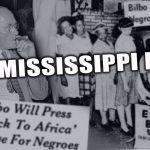
The “We Charge Genocide” petition meticulously documented the systemic violence inflicted on Black Americans. Among its evidence were 152 cases of killings by police and lynch mobs. It highlighted the complicity of government officials who either incited or condoned violence. For instance, Georgia Governor Herman Talmadge called for “hand-to-hand” combat to resist integration, while Mississippi Senator Theodore Bilbo openly encouraged using “any means” to suppress Black voting rights.
The petition also included harrowing individual cases, such as that of Aletha Bell Carter. In 1945, the 17-year-old high school student from South Carolina disappeared after visiting a relative’s house. Her father and brother later found her dead in a ditch. Aletha had been brutally beaten and violated, yet authorities claimed she drowned, despite evidence to the contrary. Suspicion fell on an insurance agent seen washing blood from his hands nearby, but no one was ever prosecuted for her death.
Another case was that of May Noyes, a 22-year-old pregnant mother of three from Camp Hill, Alabama, who lost her life in 1947. A white man named Albert Huey initiated a violent attack after an altercation with a Black World War I veteran named Australia Farrow. Huey, enraged when Farrow refused to give up his walking stick, returned to the Black section of town with a firearm. May, unable to escape due to her pregnancy, was shot and killed by Huey as she tried to flee. Huey faced no legal consequences for his actions.
Stories like these illustrated the pervasive nature of racial violence and the lack of accountability for white perpetrators. Among its evidence were 152 cases of killings by police and lynch mobs. It highlighted the complicity of government officials who either incited or condoned violence. For instance, Georgia Governor Herman Talmadge called for “hand-to-hand” combat to resist integration, while Mississippi Senator Theodore Bilbo openly encouraged using “any means” to suppress Black voting rights.
International and Domestic Impact
The “We Charge Genocide” petition had two primary objectives: to expose the systemic racism entrenched in American institutions and to raise international awareness of the plight of Black Americans. By appealing to the United Nations, the CRC sought to leverage global pressure to effect change in the United States.
The petition drew significant international attention, embarrassing the U.S. government on the world stage. It forced America to confront the stark contradiction between its democratic ideals and its treatment of Black citizens. However, the government’s response was swift and repressive. Civil rights activists involved in the petition faced intense scrutiny, harassment, and even travel restrictions. William Patterson, the CRC’s national secretary and a key figure behind the petition, had his passport revoked.
While the UN ultimately took no formal action on the petition, it succeeded in amplifying the civil rights movement and highlighting the systemic injustices Black Americans faced. It also laid the groundwork for future international human rights advocacy by civil rights leaders.
The Legacy of “We Charge Genocide”
The “We Charge Genocide” petition remains a pivotal moment in the history of the civil rights movement. It demonstrated the power of framing domestic racial injustice as a global human rights issue, a strategy that would continue to influence activism in the decades to come. The petition also underscored the enduring resilience of Black Americans who, despite systemic oppression, refused to be silenced.
As we reflect on the significance of “We Charge Genocide,” it serves as a reminder of the ongoing struggle for racial justice and the importance of holding institutions accountable for their actions. The stories it documented, including those like Nicey Brown’s, must never be forgotten. They stand as a testament to the courage of those who dared to challenge oppression and demand justice on the global stage.