Jimmy Wilson wasn’t rich. He wasn’t powerful. He wasn’t white. He was Black. He was poor. And in Jim Crow’s Alabama, that was enough. Enough to be accused. Enough to be convicted. Enough to be sentenced to die.
In 1957, Jimmy Wilson, a 55-year-old Black handyman, was accused of stealing $1.95 from an elderly white woman named Estelle Barker in Marion, Alabama. He was poor, illiterate, and living in a state where the color of your skin often meant more than the facts of your case. According to Barker, Jimmy entered her home late at night and demanded money. She claimed he physically harmed her, threw her onto a bed, and tried to violate her before fleeing when he heard a noise. But Jimmy told a very different story.
He said he was drinking that evening and out of money. He had worked for Mrs. Barker before and had even received advance payment against future yard work. He said he went to her house to ask for help again. She got angry and threw him some coins from her purse. Jimmy quickly grabbed it and he left. No breaking in. No violence. No assault.

But it didn’t matter. Barker’s word as an elderly white woman carried more weight in 1957 Alabama than Jimmy Wilson’s truth ever could. He was arrested two days later and picked out of a lineup at the Perry County Jail. Authorities claimed he confessed to intending to rob Mrs. Barker. Jimmy denied it. None of that mattered. He was charged with three capital offenses: nighttime burglary with the intent to ravish, nighttime burglary with the intent to steal, and armed robbery.
At trial Jimmy was appointed two attorneys—Judson C. Locke, a state legislator with no criminal trial experience, and Sheldon Fitts. Neither of them called a single witness. Jimmy never took the stand. And when Estelle Barker testified, she didn’t focus on the stolen money. She focused on what she believed Jimmy’s true intent was: to violate her.

Jimmy’s lawyer filed a motion for a mistrial, calling her testimony inflammatory and prejudicial. But that was the extent of the defense. There was no cross-examination. No effort to challenge the state’s version of events. No fight for Jimmy Wilson’s life.
The trial started at 9:00 AM. It was over by 1:30 PM. The jury—all white—deliberated for less than an hour. Jimmy Wilson was found guilty and sentenced to die in Alabama’s electric chair.
For stealing $1.95.

His case was appealed, but the Alabama Supreme Court found no fault. No injustice. Nothing improper about the fact that a poor Black man with no real defense had been sentenced to death over pocket change. His lawyers stepped down from the case. That’s when Jimmy’s brothers stepped in and hired a young Black civil rights lawyer named Fred Gray.

Fred Gray is a name that should be taught in every American classroom. He represented Claudette Colvin before Rosa Parks ever sat down on that bus. He defended Dr. King. He challenged the system every time he walked into a courtroom. And now, he was taking on Jimmy Wilson’s case.
Gray filed for a rehearing in the Alabama Supreme Court. It was denied. Jimmy’s execution was set for October 24, 1958. So Gray shifted strategy. He filed for clemency from the governor.
That’s when the story changed.
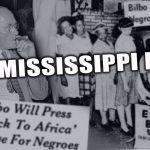
As Jimmy sat on death row, the world started to pay attention. News of his sentence traveled fast. Articles appeared in newspapers in London, Paris, and Toronto. Letters began to pour into the office of Alabama Governor James E. Folsom. Thousands of them. Many included $1.95—sent as repayment, as if returning the stolen money might save a man’s life.

In Jamaica, hundreds of protesters marched to the U.S. consulate chanting: “If Jimmy Wilson goes to the electric chair, no American white man nor woman can remain in Jamaica.” In Switzerland, more than 400 high school students signed a letter to the U.S. Embassy. Foreign ministers at the United Nations raised questions. In Canada, Prime Minister John Diefenbaker was asked to intervene. Even Ghana’s prime minister was contacted to reach out to President Eisenhower. This wasn’t just a Southern story anymore. It was an international crisis.

America was trying to sell itself to the world as a beacon of democracy. A moral leader in the global fight against communism. But stories like Jimmy Wilson’s undercut the message. The Soviet Union didn’t have to invent propaganda—it only had to reprint what was happening in Alabama.

Fred Gray sought a clemency hearing before the governor to beg to Jimmy’s life. At that hearing, the original prosecutor, Blanchard McLeod, argued for Jimmy’s death. He said Jimmy didn’t get the chance to rape Barker—but that he had planned to. He said Jimmy deserved to die for what he did. But Fred Gray stood up and told the truth. That the real crime here wasn’t robbery—it was racism.
And then the governor made his choice. On September 29, 1958, Governor Folsom announced that Jimmy Wilson’s sentence would be commuted to life in prison. Not because justice demanded it. But because America was embarrassed.

Jimmy Wilson’s life was spared. But not because anyone cared about Jimmy. He was spared because saving America’s image required it. And that truth should haunt us. Because it tells us something about what justice meant for Black people in the Jim Crow South. It meant nothing. You could be sentenced to die for pocket change. Your defense could be meaningless. Your story could be ignored.
Jimmy Wilson was paroled in 1973, after serving 16 years. He was 70 years old. After that, we don’t know what happened to him. No obituary. No records. No interviews. Just silence.
But we remember. And we tell his story. Because it deserves to be told. Not because it’s rare. But because it’s not. Jimmy Wilson mattered.
And $1.95 should never have come that close to costing a man his life.