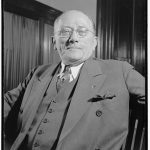
Sheriff Edwin “Pat” Evans was a man whose name became synonymous with brutality and corruption in Macon County, Alabama. His time in office was marked by a reign of terror against Black residents, operating with near impunity under the laws of Jim Crow.
The Rise of a Brutal Sheriff
Elected in 1940, Evans wasted no time establishing himself as a force of racial oppression. He was not just a sheriff; he was an enforcer of white supremacy. His primary targets were Black residents of Tuskegee, a city known for its rich Black history, home to both Tuskegee University and a VA hospital staffed entirely by Black professionals. Evans resented these institutions and the Black prosperity they fostered.
A Corrupt System
Evans manipulated the legal system to serve his own ends. He falsely arrested Black citizens, often on baseless charges. Many of his warrants contained no factual allegations or were not even signed by a judge. He overcharged legal fees, pocketing the money himself. He also used prohibition laws as a tool of oppression, instructing informants in bars to notify him when Black residents drank in neighboring counties so he could arrest them upon their return.
The Abuse of Power
Walter Gunn was just one of many victims. Evans and his deputies, particularly Henry F. Faucett, routinely brutalized Black residents. The stories were horrifying:

- Walter Gunn, a hardworking truck driver and family man, was gunned down in his own yard, then beaten in front of his family before being left for dead.
- Eugene Brown, a 41-year-old Black man, was falsely accused of stealing tires. Evans and Faucett handcuffed him to a tree and beat him with sticks and blackjacks, attempting to force a confession. When he maintained his innocence, they beat him again the next night, this time leaving him unconscious.
- James Martin, a Black man who had been drinking with others, was chased by Evans and his deputies. When they caught him, they beat him severely with a walking stick.
- Lillie Mae Hendon, a widowed housekeeper, was arrested and held in jail for three days without charges. When she refused to confess to a theft she did not commit, Evans and Faucett dragged her to the woods. Faucett held her down while Evans whipped her with a cane until she was covered in blisters and blood.
- France Stafford Patterson, another victim, was beaten with a walking stick after a Black man accused her of stealing money.
The Trial of Evans and Faucett

The FBI’s investigation led to a federal grand jury indictment against Evans and Faucett in April 1943. The case went to trial in Opelika, Alabama, where the prosecution presented strong evidence, including testimonies from numerous victims. However, the Jim Crow legal system proved impenetrable—an all-white jury found them not guilty. The trial not only highlighted the deep racial bias in Alabama’s judicial system but also demonstrated how law enforcement was shielded from accountability.
The Unchecked Power of White Supremacy
Despite the overwhelming evidence against them, Evans and Faucett walked free. Their trial served as a grim reminder of the racial power dynamics that defined Jim Crow-era law enforcement. Sheriff Evans’ legacy is one of unrestrained brutality. His crimes were not those of a lone rogue officer but of an entire system designed to keep Black people powerless. His reign of terror serves as a sobering reminder of how law enforcement was used to uphold white supremacy in the Jim Crow South.