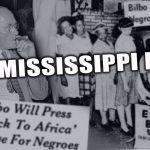
The struggle for Black liberation has been marked by countless acts of courage and defiance, often met with violent resistance. Among the most overlooked chapters in this history are the experiences of Black students on college campuses in the 1960s and 1970s. These students not only championed the fight for civil rights but also became direct targets of state violence, harassment, and systemic oppression.
The Jackson State Massacre: A Tragic Example of Injustice
On May 15, 1970, the campus of Jackson State College in Mississippi became the site of a horrific tragedy. Following weeks of harassment by white motorists who drove through the predominantly Black campus, tensions reached a boiling point. White residents frequently hurled racial slurs, threw bottles, and even attempted to run over students walking to class.
On the night of the tragedy, verbal and physical altercations erupted between Black students and white motorists. When a dump truck was set on fire, the police and the Mississippi Highway Patrol were called in. Rumors that Charles Evers, brother of slain civil rights leader Medgar Evers, and his wife Myrlie had been attacked fueled fear and unrest.
As police approached Alexander Hall, a women’s dormitory, an ominous escalation occurred. A glass bottle hit the ground, and officers unleashed a 30-second barrage of gunfire. When the smoke cleared, the scene was devastating. The FBI later documented 275 bullet holes in the dormitory walls.
Twelve students were injured, and two lost their lives. Phillip Gibbs, a pre-law student with a pregnant wife and young child, and James Green, a high school student walking across campus after his grocery store shift, were killed. Despite the gravity of the incident, no one was ever held accountable. Families of the victims filed a civil suit against the state of Mississippi, but it was dismissed, with the judge ruling it was unclear who was at fault. The state has yet to issue an apology.
A Pattern of Violence Against Black Student Activism
The tragedy at Jackson State was not an isolated event. Across the country, Black students protesting injustice faced brutal retaliation from law enforcement.
- Alcorn A&M College, 1966: Police attacked students with tear gas and clubs as they protested their school administration. In 1968, three students were wounded when police cleared a burning dorm.
- Texas Southern University, 1967: Protests over the death of an 11-year-old boy in a segregated Black neighborhood led to a police response that included 500 rounds of gunfire, leaving several students wounded.
- South Carolina State and Claflin University, 1968: Students protesting a segregated bowling alley were met with deadly force. Police fired at students for over 10 seconds, killing three and wounding 28 others, most shot in the back.
- North Carolina A&T, 1969: Willie Grimes, an honor roll student, was killed during clashes between students and police.
- Southern University, 1972: Students occupying the administration building were met with tear gas and bullets. Leonard Brown and Denver Smith were killed during the confrontation.
Violence Beyond College Campuses
Black student activism wasn’t confined to colleges—it extended to younger students as well. In 1967, thousands of Black students in Philadelphia protested for better school conditions and were brutally beaten by police. Two years later, in Chicago, racial tensions at Tilden High School led to police attacking Black students, with dozens hospitalized.
The Legacy of Black Student Activism
These stories serve as a stark reminder that Black youth have long been at the forefront of the fight for justice, often paying the ultimate price. While the civil rights movement of the 1960s and 1970s is often seen through the lens of key figures and major events, the contributions and sacrifices of Black students are equally important.
From the 1920s to today, Black students have consistently challenged systemic oppression, advocating for equality and justice. Their courage and resilience are a testament to their unwavering commitment to change, even in the face of overwhelming adversity.
It is imperative that these stories are remembered and shared—not just as a record of the past, but as a call to action for the future. Black youth have always been, and continue to be, pivotal in shaping the course of history.