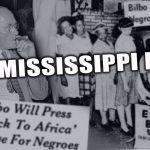
Under Jim Crow laws, Black people were expected to remain in a subservient role, and any perceived breach of the racial code could lead to swift and brutal punishment. These rules extended into every aspect of life—including childhood. Black children were taught that their innocence would not protect them, and even the smallest misstep could have deadly consequences.
The Rigid Racial Order
Jim Crow laws were not just written statutes—they were a deeply ingrained system of social control. From an early age, Black children were taught how to navigate these unspoken rules. They were expected to step aside for white people on sidewalks, avoid eye contact, and never show signs of familiarity or equality in interactions with white individuals. Violating these unwritten rules could have life-threatening consequences.
One of the most dangerous violations involved interactions between Black males and white females. Even the appearance of impropriety—whether real or imagined—could result in violence. The brutal lynching of Emmett Till in 1955 became one of the most infamous examples of this, but many Black boys and men had suffered similar fates long before Till’s murder.
Enforcing Racial Etiquette
Black children were raised to follow these rules from a young age. Parents warned them that stepping out of line could lead to brutal consequences. Even seemingly harmless actions—laughing too loudly in front of white people, failing to step off a sidewalk, or speaking too freely—could be seen as violations of Jim Crow’s racial order.

This was especially true when it came to interactions with white women. A 1942 case in Mississippi saw Ernest Green and Charles Lang, two Black teenagers, lynched simply being accuesd of chasing a white girl. Their fate reinforced the deadly message that even innocent interactions between Black boys and white girls would not be tolerated.
The Case of Willie James Howard

One tragic example of racial etiquette enforcement was Willie James Howard, a 15-year-old Black boy in Live Oak, Florida. During the 1943 holiday season, Willie gave a Christmas card to a white girl, Cynthia Goff. The note was innocent, but under Jim Crow, it was seen as a challenge to the racial order. Days later, Willie was kidnapped by three white men, bound, and thrown into the Suwannee River. His murder, like so many others, was never punished.
A System of Control and Fear
The Jim Crow system was not just about segregation—it was about complete control over Black life. It dictated not just where Black people could sit or eat, but how they could exist in society. Something as small as a Christmas card or a game of tag could be seen as an act of defiance worthy of death.
Black parents taught their children from an early age how to avoid white retaliation: don’t make eye contact, don’t speak unless spoken to, always move aside on sidewalks, and never be seen as too familiar with white people. These lessons were not about politeness—they were about survival.
The Legacy of Racial Etiquette
The racial etiquette enforced under Jim Crow left a lasting impact. It created a climate of fear where Black children had to grow up too fast, learning early that their lives could be destroyed over something as minor as an innocent exchange. The legal system, designed to uphold white supremacy, ensured that white perpetrators faced no consequences.
While the Jim Crow era may have ended, its legacy remains. The racial codes that once governed every aspect of Black life have evolved into new forms of racial profiling and systemic discrimination. Understanding this history is crucial to confronting the inequalities that persist today.
The Jim Crow racial order was not just about laws—it was about upholding a strict social code that policed every aspect of Black life, including childhood. The cases of Willie James Howard, Ernest Green, and Charles Lang demonstrate how even minor interactions could be viewed as transgressions punishable by death. These rules ensured that Black children were never truly seen as children, stripping them of the innocence and freedom that white children took for granted.
Honoring their stories means acknowledging the full truth of America’s racial past and continuing the fight for justice. It also means recognizing that the enforcement of racial hierarchy did not disappear with Jim Crow—it only changed forms.
To learn more about the real stories behind these tragedies, click the links below and explore the history they tried to silence.