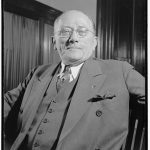
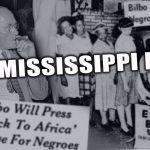
Watch the full video story of George and Mary Green And see how the Klan didn’t hide—because they didn’t have to.
The First Threat Came as a Rhyme
Sometime around 1867 or 1868, a freedman named David Macy received a note on his door. And when we say freedman, we mean he was enslaved—freed only after emancipation came in 1865.
David lived in South Carolina. The first state to secede from the Union and start the Civil War. A state that fought hard to preserve slavery. A state not ready to let go of its bonded past, and certainly not ready to embrace our freed future. Where seeing a Black man as anything other than property was like seeing the sky as anything but blue.
But it wasn’t just Black and free. It was Black… and citizen. And that was the real threat. Because citizens are entitled to rights. To liberty. To say: “We hold these truths to be self-evident, that all men are created equal.”
With emancipation, Black people were now included in “We the People.” And David Macy wanted all of it. The freedom. The liberty. The dignity. None of the bondage.
Then he got that note on his door:
“Alive today. And Dead tomorrow—if you don’t leave.
Six unplucks Plan. Have nothing to eat but the flesh of man.
Band of Knights and Banish by day.
Old Dave, get out of the way.”
This wasn’t a riddle. It wasn’t a poem. It was a threat. A message written in rhyme, but spoken in the language of terror. The note came from two white men who ran an illegal still. They believed David had reported them. It wasn’t their first threat. One of them had already come to David’s house and stared at his wife in silence, lit his pipe, and walked away. Intimidation was the message.
And David? He didn’t leave. He survived the scare. But there’s something you need to understand: Bowers and Ward weren’t acting alone. They were part of a vigilante group called the Bushwhackers—a local, post-war crew whose mission was to disrupt Black people’s pursuit of citizenship and freedom.

But the Bushwhackers were scattered. Uncoordinated. And that lack of structure paved the way for something darker.
A group that wouldn’t just intimidate. It would organize the terror. Refine it. Perfect it. The group we now know by just one word: the Klan.
The Klan Wasn’t Just Born—It Was Designed
The Klan didn’t begin in a church. Or a field. Or a courtroom. It started in 1865 in a judge’s office—six ex-Confederate soldiers in Pulaski, Tennessee. Defeated. Bored. Brooding.

They came up with a name. A costume. A little club to play dress-up.
They called themselves the Kuklos—a Greek word for circle. From that came Ku Klux. And then: the Klan. With titles like Grand Cyclops, Grand Turk, and Grand Magi, they gave themselves the illusion of power. Ghouls. Furies. Hydras. Lictors. They weren’t hiding their intentions. They were branding their movement.

They said it was for fun. They paraded in costume. They played tricks on Black families. One ritual involved riding to a Black family’s home, asking for water, and funneling it through a hidden tube while pretending to drink. Then they’d say: “I haven’t had a drink since I died… at Gettysburg.” It wasn’t just a prank. It was a psychological weapon. A twisted attempt to make Black families believe that Confederate soldiers were rising from the grave to haunt them for daring to live free.

It was theater. But the fear was real. They weren’t pretending to haunt Black families. They were declaring their return—not just as individuals, but as a system.
South Carolina Made Space for the Klan to Grow
The Klan thrived in South Carolina not just because of what they believed, but because of what the state already accepted. This was a place that had long used violence as a tool of public order: slave patrols, Black Code patrols, mob justice dressed up as protection.
When slavery ended, those instincts didn’t vanish. They put on robes.
The Klan didn’t just punish votes. They punished dignity. A freedwoman said no to working for a white man—she was Ku Kluxed. A Black fiddler played music for guests on white-owned land—the Klan came. A preacher said he wanted to raise his child “as good as anybody’s” —they beat him and his wife.
Because in their eyes, Black pride was a crime. Black hope was a threat. Black independence had to be punished.
This was never just about elections. It was about control. Control of Black votes. Black labor. Black futures. Black spirit.

And it got so bad, so lawless, so brazen, that even President Grant had to step in. In 1871, he ordered a federal crackdown. Hundreds were arrested. Dozens were indicted. But convictions were rare. Because even when the federal government showed up, the system still found a way to protect the very people who had terrorized Black citizens for years.
The Second Klan Didn’t Hide. It Marched Proudly.
That was the first wave. But there was a second.

It began in 1915—after the release of The Birth of a Nation. A film that glorified the Klan, demonized Black men, and became America’s first blockbuster. It was embraced from local theaters to the White House.

The second Klan exploded. By the 1920s and 30s, over four million Americans were members. South Carolina alone had at least 22 Klan branches. The one in Greenville, where George Green lived, was called Poinsett Klavern No. 26.

This Klan wasn’t in hiding. They marched unmasked. Held parades. Sponsored pageants. Hosted baseball games. They weren’t a secret. In many towns, they were the power structure.
They sold morality in public—and enforced terror in private.
They carried out threats. They punished those who resisted white control. And when the Great Depression hit, they doubled down—blaming the federal government, targeting Black families, and recruiting poor white Southerners into their crusade.
This was the world George Green lived in. This was the world Mary Green tried to survive.
And this wasn’t just hate. It was hierarchy. A system. A blueprint.
It Was Injustice By Design
The Klan didn’t operate in the shadows. It didn’t need to. Because America made room for it.
The courts. The churches. The sheriffs. The neighbors. They weren’t just watching. They were participating. That’s what we mean by injustice by design.
And if you want to see how this system played out in real life, you don’t have to look far.
See the story of George Green
See the story of Ned Thompson
Both part of the Injustice By Design series.