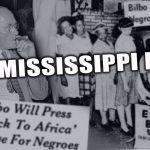
The American legal system has never been blind to race. It has never been fair. It has never been just.

In 1931, nine Black teenagers—the Scottsboro Boys—were accused of raping two white women in Alabama. Without evidence, without a fair trial, and without regard for the truth, they were convicted and sentenced to death. The mere accusation of assaulting a white woman was enough to justify their execution.
But twenty years later, when a group of white soldiers brutally attacked an 18-year-old Black woman named Lula Mae Artes, the justice system took a very different approach. The men who harmed her were convicted—not of rape, but of a misdemeanor. They served just 18 to 20 months in prison.
The difference? Race.
Lula was a Black woman. Her pain did not matter. The Scottsboro Boys were Black men. Their mere existence was enough to warrant their destruction.
This is the story of how the legal system created two separate realities—one designed to punish Black men at any cost, and another designed to protect white men no matter their crimes.
The Scottsboro Case: Guilty Without Evidence
On March 25, 1931, nine Black teenagers boarded a freight train in Alabama. What began as a fight between Black and white passengers quickly spiraled into a fabricated accusation that would alter their lives forever. Two white women, Victoria Price and Ruby Bates, claimed they had been raped. There was no medical evidence. Bates would later admit she had lied. But it didn’t matter. The boys were Black, and that was enough.

Within days, the Scottsboro Boys were arrested, indicted, and sentenced to death. An all-white jury, fueled by racial hatred, took just a few hours to seal their fate.
The case went to the U.S. Supreme Court twice. The first ruling overturned the convictions due to inadequate legal representation. The second, Norris v. Alabama (1935), found that Alabama had excluded Black people from jury service, violating the defendants’ rights. These rulings should have freed them.
But freedom was not given so easily to Black boys accused of violating white womanhood.
Despite the rulings, Alabama retried them multiple times. Some were sentenced to death again. Others spent years behind bars. It took nearly two decades for the last Scottsboro defendant to be released.
The case was not about guilt or innocence. It was about racial power. It was about reminding Black men that their lives were disposable.
Lula Mae Artes: Justice Denied
Unlike the Scottsboro Boys, Lula Mae Artes was not accused of a crime. She was the victim. But in Jim Crow’s America, Black women were not considered victims.
On the night of August 15, 1951, white soldiers abducted Lula Mae, took her to a field, and attacked her. She reported the crime immediately. The suspects were identified. Some even confessed.

Yet when the case went to trial, the courtroom operated under a different set of rules. The defense did not argue that the crime didn’t happen—they argued that Lula consented.
The all-white jury had five choices:
- Convict the men of rape.
- Convict them rape with a life sentence recommendation.
- Convict them of attempted rape.
- Convict them of assault–a misdemeanor.
- Acquit them entirely.
The jury chose the lightest punishment possible—assault The men served less than two years in prison.

Justice did not fail Lula Mae Artes. Justice was never meant for her.
Two Courtrooms, Two Americas
The legal system operated in extremes when it came to race and sexual violence.
For Black men like the Scottsboro Boys, even a whisper of an accusation by a white woman meant swift and brutal punishment. They were assumed guilty, and the courts rushed to condemn them.
For Black women like Lula Mae Artes, no amount of evidence was enough to convict white men of harming them. Even when white men confessed, the law shielded them from consequences.
Both cases expose the legal system’s true purpose: to uphold white supremacy. It was never about justice. It was about power.
The Scottsboro Boys and Lula Mae Artes stood on opposite ends of the racial double standard in American justice.
For the Scottsboro Boys, white women’s accusations—no matter how false—held more weight than their lives. For Lula Mae Artes, white men’s confessions—no matter how damning—were not enough to secure real punishment.
The courts did not exist to serve Black people. They existed to remind Black people of their place.
This is why we must continue to tell these stories—because the truth, no matter how painful, must be known.