What happens when Black people say no? When we demand more? When we stand up and refuse to stay seated? That’s what this story is about. But it’s also about the response to Black agency. Because in this country, Black progress has always been met with backlash. With punishment.
This is the second story in our Black Resistance series. In this series, we’re exploring how Black people responded to injustice — and sometimes, how our response was met with even more of it. In the first video, we told you about Lula Sherman — a 14-year-old Black girl who suffered unspeakable brutality — and how the Black community responded in a way that shocked the very system that failed to protect her. In this story, we turn to a different kind of resistance: one rooted in economics — in labor, in dignity, in the right to set the price of your own work. And we’ll see the price that Black people paid just for saying: We are worth more.
A Town Divided by Lines and Labor

Onancock sat on Virginia’s Eastern Shore — a peninsula of farmland and fishing towns pressed between the Chesapeake Bay and the Atlantic. Its economy was rising in 1907. The town was growing. But so were the lines — racial, economic, political. Onancock’s white neighborhoods boasted brick buildings and manicured gardens. Its Black residents lived on the town’s edge — close-knit, hard-working, and largely employed in service to the white economy. Their community had its own paper, its own businesses, and its own dignity.
Two Men and a Movement

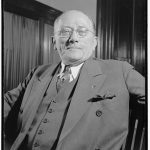
Samuel Burton was a teacher turned businessman. He owned a general store in the back section of Onancock — providing much-needed groceries and supplies to his people. His store earned $10,000 a year. That’s around $340,000–$350,000 today.
James Uzzle was a school principal and editor of the only Black newspaper in the area. Both were respected. James was also active socially. He served as the secretary of the Colored Teachers Association in Accomack — a position that Burton had held before him. And together, Burton and Uzzle ran the Central Agricultural Fair Association. Burton was the president, and Uzzle was the secretary. Every year, they put on the Colored Fair — a time for education and enjoyment for Black people in the county.

Together, Samuel and James advocated and encouraged Black people to demand more pay — to be paid what they were worth. They were leaders in the wage labor movement. Both were rooted in their community. And that made them dangerous.
Whites were not happy with what was occurring. All this talk of Black people standing up for themselves — demanding better pay, wanting to be treated fairly — that wasn’t good for Jim Crow’s profits. And this had to be stopped.
A Two-Dollar Spark
The injustice that was about to happen all started over two dollars. In August of 1907, 22-year-old Sylvanus Conquest worked at Samuel Burton’s store as a clerk. Sylvanus owed two dollars to a white man named John Fosque. He had rented a horse and buggy from Fosque, and when he failed to pay the debt — even though it was only two dollars — Fosque didn’t let it go. He went to court and got a judgment against Conquest for the money owed. After securing the judgment, he took it to the authorities to enforce it.
On August 9, 36-year-old Constable Tankard Kellam came to Burton’s store to carry out the court order. He was going to seize Conquest’s horse to satisfy the debt. Conquest told the constable it wasn’t his horse — that he couldn’t take it, that he’d be taking someone else’s property. The two began to argue. Samuel saw what was going on. He quickly sided with Conquest in the matter. After that, more Black people began to crowd around. The scene got intense. Kellam was white — and he was the law — but he was outnumbered, a situation he did not want to be in. So he quickly left. The Black people, tired of constant injustice and unfairness, thought they had won the day.
That same day, Constable Kellam got a warrant for Conquest’s arrest. He said that Conquest had resisted arrest. Conquest was made to come before the mayor of Onancock, Leonidas Doughty. Samuel Burton was also made to come down. He testified at the hearing. Told what happened. Told the truth. When Samuel was done testifying, he was ordered to leave. Apparently, he moved too slowly for Constable Kellam’s liking. Kellam, still upset about what happened in the store, yanked the chair from under Samuel — causing him to fall. The mayor then quickly found Conquest guilty of resisting arrest and fined him $50 — even though the debt was only two dollars.
But the fine wasn’t enough for whites in town. They were angry about what happened to Kellam and even more angry that Black people were making demands and showing agency. So they sent a message: any Black person who planned to shop on the white side of town that Saturday had to leave by 8:30 p.m.
“Be Gone by 8:30”
James Uzzle made his way to the white section of town around 8 p.m. — thirty minutes before the curfew the whites had set for them. He walked toward the post office. That’s when five young white men, leaving R. L. Shield & Company’s store, saw him. They went straight over to James, told him it was past his bedtime, that he needed to leave. James didn’t like this. But he kept his cool. He told the white men he wasn’t bothering anyone and didn’t want any trouble. But the men didn’t care. They responded with violence. They beat James — knocked him down, hit and struck him. They beat him badly — so badly that James feared for his life.
What the white men didn’t know was that James was armed. James couldn’t take it anymore. He pulled out his revolver and fired twice at the men. The firing scattered the attackers. James slipped away, escaping into the shadows behind the Episcopal Church and making his way toward Burton’s store. But he didn’t just fire — he struck one of the men, Garland Belote. He was hit in the thigh. It wasn’t fatal. But he had been shot. And by a Black man. And that sealed it.
After the shots were fired, white men came pouring into the streets. That’s when the rumors started. The story began to spread: that Black people were rising up. That they were going to burn the town, massacre white citizens, violate white women, and loot white property.
Into the Woods
Samuel’s life was now in danger — even though he didn’t even know what had happened. A young white man named J. C. Wescott heard what was being planned for Samuel and sent someone to deliver a warning: leave town immediately, or risk losing your life.
When Sam got the message, he was still at his store with Sylvanus. They turned down the lights inside so no one could see them, then quietly closed up the shop and left. They ran into the woods to hide.
Just like rumors were spreading on the white side of town, they were spreading on the Black side too. White residents were fearing a Black riot. And Black residents were fearing that white people were about to come and massacre them. Black people believed that they were about to be attacked — that a massacre was coming.
The Hack and the Ambush
At around 8:45 that same evening, a hired carriage — known as a hack — left Conrad’s Hotel in downtown Onancock and headed toward the train station. The carriage was owned by John Fosque — the same man whose two-dollar debt had started all of this. Inside the carriage was the driver, a Black man named Braden Short, who worked for Fosque. Also riding in the carriage were Dr. M. J. Hunt and two other white men.
To reach the train station, the carriage had to pass through the Black section of town. As they made their way past Samuel Burton’s store, Dr. Hunt noticed what he thought was a hog off to the left side of the road. He thought nothing of it — and the carriage kept moving. But it wasn’t a hog. It was a Black man named John Topping. He stood up from the shadows and gave a signal — alerting a group of other Black men that the carriage was approaching. And that it was time to fire.
When Topping gave the signal, the men emerged and opened fire on the carriage. When it was over, the carriage was riddled with bullets. And John Topping had been shot in the shoulder. There is no evidence that Burton or Sylvanus were involved in the ambush. But it didn’t matter. White mobs retaliated.
Mob Rule
After the attack on the carriage, white Onancock was in an uproar. They believed it was retaliation — and they were convinced that Black people were about to riot and storm the white side of town. So they armed themselves.
And while they were preparing for battle, officials started looking for Samuel Burton and Sylvanus Conquest. They planned to blame them for everything. More than three dozen white men marched straight to Samuel Burton’s store. Constable Kellam was leading the group. He believed there was a mob of Black men hiding inside. He called in reinforcements.
By that time, rumors had already spread through the Eastern Shore — wild, exaggerated claims that Black people were planning an uprising. White men rushed in from all across the countryside — some from as far as Crisfield, Maryland, more than 50 miles away. By 11 p.m., they were ready to move in. Kellam gave the order, and the mob fired hundreds of rounds into Samuel’s store. They thought Black people would come running out. But no one did. The store was empty.

Still not satisfied, they tore through the Black section of town — firing into homes, shattering windows, destroying property. But even that wasn’t enough. They wanted Samuel. They wanted James. They wanted Sylvanus. And when they couldn’t find them, they came back to Samuel Burton’s store. This time, they brought gasoline. They poured it across the building and burned it to the ground. Then they did the same to James Uzzle’s printing shop.
Driven Out of Town

The violence wasn’t only about punishing individuals — it was about purging the town of Black leadership and influence. In the days after the shooting of Garland Belote, a white “citizens’ committee” drew up a list of prominent Black men they wanted gone. At the top were Samuel Burton, James Uzzle, and Sylvanus Conquest. But the list didn’t stop there. It included Dr. I. Moon, a respected Black physician, and several other community members whose only crime was their standing and success. These men, along with their families, were told in no uncertain terms to leave Onancock and never return. Under the threat of mob violence, many packed what they could and fled, abandoning their homes, businesses, and livelihoods. The goal was clear: strip the Black community of its leaders, scatter them, and make sure no one would dare challenge the racial order again.
Trials and Aftermath

After days of hiding in the woods, James, Samuel, and Sylvanus turned themselves in. The three men were later tried for the murder of John Topping and the wounding of the young white man at the post office. The men were quickly found guilty. But their convictions were later overturned by the Virginia Supreme Court. At their second trial, James was found not guilty, but Samuel and Sylvanus were convicted again. And once again, the Virginia Supreme Court overturned them. This time, the court said there was no evidence connecting either man to the crime.
The prosecution had a choice to make: would it try the men again? Finally, on October 26, 1908, the Commonwealth’s Attorney announced that it would be — in his words — “useless” to continue the case. The charges were dropped. And Samuel and Sylvanus were set free — allowed to return to their lives.

Legacy and Memory
No official marker stands in Onancock today for Burton or Uzzle. No record of the fair. No plaque for the press that was destroyed. But the memory lives. And the truth remains: Black people said no. And the system said, never again. This wasn’t a riot. It was a reaction — to Black dignity, Black leadership, and Black refusal to be erased. And it belongs in our memory. Because memory, too, is a form of justice.
We tell this story not to dwell on pain, but to honor those who stood. Their resistance was not perfect. But it was right.