Throughout American history, Black girls have endured violence in silence—not just because their voices were ignored, but because their very names were withheld. Their stories were told, but their identities erased. Their pain reported, but their personhood denied.
Sometimes this was explained away as protecting a minor’s identity. But that explanation fails to hold when we examine the pattern. Over and over, when Black girls were attacked—particularly by white men—their names disappeared from the headlines, from the courtroom, and eventually from history.
This wasn’t just neglect. It was a strategy of erasure. And it protected not the girls—but the systems that harmed them.
A Long History of Silence
The pattern stretches back through generations. Ida B. Wells wrote in the 1890s about an 8-year-old Black girl who was raped by a white man and received no justice. Her name was never recorded in the newspapers. The man was not punished. Wells noted how white men faced no public shame for attacks on Black girls, while Black men were lynched for consensual relationships with white women.
This is how the rules were written: white men were protected. Black girls were not.
In countless other cases throughout the 19th and 20th centuries, Black girls were referred to simply as “the maid,” “the child,” or “the girl.” They were left unnamed even when their attackers were known and their testimonies were public. This dehumanization wasn’t accidental. It was a tool. One that allowed society to move on without reckoning.
Who Gets to Be Named?
Naming is power. When we say someone’s name, we affirm that they existed. That they mattered. That they were not invisible.
But in America, not everyone gets to be named. Victims who fit a certain image—young, white, middle-class—are given headlines and hashtags. They are remembered.
Black girls are often not. Their stories are minimized. Their credibility questioned. Their identities erased.
This is especially true when the perpetrator is white. Saying the victim’s name would force society to reckon with her humanity—and with his guilt. And for decades, that reckoning was deliberately avoided.
When the Press Did Speak
There were exceptions. The Black press, in particular, often worked to tell the truth about violence against Black girls and women.
In the 1938, a Black girl named Hattie McCray was attacked by a white man. She fought back—and was murdered. The Black press named her, printed photos of her, and even ran a poem honoring her courage. They called on the community to remember her.

But Hattie’s case stood out because she had died. She was viewed as having “defended her honor” to the death. That made her more palatable to public memory. For those who survived—who had to live with the trauma and stigma—the press often remained silent. Even Black media sometimes failed to tell their full stories unless the girls were seen as “respectable” enough.
Respectability politics played a powerful role. Girls who were poor, rural, or didn’t have access to church-centered or school-based support networks were more likely to remain invisible—even within their own communities.
The Girl We Now Call Rose
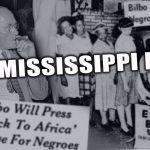
In 1951, a 14-year-old Black girl in Jackson, Mississippi was brutally attacked by a 48-year-old white man named Hugh Morrow. Her name was never printed in the news. Court records shielded her identity. She testified. She was hospitalized. She was supported by Black women who formed a committee to demand justice. And still, the public never got to know her name.

We call her Rose—not because it was her name, but because she deserved one. And Rose was not alone. A 12-year-old girl in Batesville. A 30-year-old woman assaulted in broad daylight. None of their names were preserved in the public record.
The silence was never neutral. It was never for their protection. It was for the protection of the system.
This Silence Still Echoes
The practice didn’t end in the 1950s. Today, missing Black girls receive less media attention than their white counterparts. Cases involving violence against Black girls are underreported, or reported with suspicion, blame, or incomplete details.
When Black girls are erased from the narrative, it tells them—and the world—that their lives don’t matter. That their pain is not worthy of outrage. That their stories are disposable.
We resist that. By saying their names, by telling their stories, by refusing to let the silence continue.
Erasure is not protection—it is violence. It removes girls from their own stories. It protects those who harmed them. And it denies communities the truth. We call her Rose. Not because that was her name, but because she was someone. And because too many like her were never named at all.
To learn more about Rose—the girl the papers wouldn’t name—and the fight for her dignity and justice, watch our full video here: