The Origins and Misuse of Qualified Immunity
Over the last fifty years, the Supreme Court has consistently expanded qualified immunity, a legal doctrine that has increasingly shielded police officers from accountability, even in cases of egregious misconduct. The sole purpose of qualified immunity today is to give police officers a “get out of jail free” card, allowing them to escape consequences for violating citizens’ rights, particularly those of Black Americans. To understand how dangerous this doctrine has become, it’s crucial to examine its origins and evolution—think of this as a mini law school class on qualified immunity.
Qualified immunity was created by the Supreme Court in 1967, six years after the Court recognized the right to sue police officers in federal court in a landmark case called Monroe v. Pape (1961). It’s important to note that qualified immunity is not mentioned anywhere in the Constitution. It was invented by the Court under the pretext of protecting officers who acted in “good faith.” However, over the years, this doctrine has been stretched far beyond its original intent, now covering even those officers who act in bad faith.
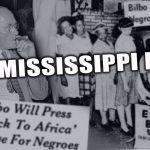
The case that birthed qualified immunity was Pierson v. Ray (1967). Interestingly, the facts of this case had nothing to do with police brutality or excessive force. Pierson involved 15 Black and white ministers who were part of the Freedom Rides in Mississippi in 1961. When they refused to leave a coffee shop, they were arrested and convicted for breaching the peace. Although the law under which they were charged was later found unconstitutional, and their convictions were overturned, the ministers sued the officers under Section 1983 for violating their rights. The Supreme Court introduced qualified immunity in this case, arguing that officers who act in good faith should not be held liable for arrests made under laws they mistakenly believed to be valid. This was the beginning of a legal standard that would eventually protect officers far beyond what the Court originally intended.
The Expansion of Qualified Immunity and Its Consequences
Since its inception, the Supreme Court has continually strengthened qualified immunity, making it easier for police officers to escape accountability for their actions. Every time the Court expands this doctrine, it emboldens police officers to act unconstitutionally, disproportionately endangering Black lives.
In Harlow v. Fitzgerald (1982), the Court made a significant change that further protected bad cops. It ruled that an officer’s intentions don’t matter when determining qualified immunity—all that matters is whether the law was “clearly established” at the time of the incident. This shift meant that even if an officer acted with malicious intent, they could still be granted immunity if no previous case had explicitly stated that their specific actions were unconstitutional.
This “clearly established law” standard has led to some truly outrageous outcomes. Take the case of Baxter v. Bracey (2000). In this case, the court upheld qualified immunity for officers who released a police dog on a suspect who was sitting down with his hands up—a clear act of surrender. The court acknowledged that the officer’s actions were unconstitutional but still granted qualified immunity because there was no previous case with identical facts prohibiting such conduct.
Another egregious example is Kelsay v. Ernst (2019). In this case, qualified immunity was granted to an officer who slammed a nonviolent, non-threatening woman to the ground, breaking her collarbone and knocking her unconscious. Although there was existing case law prohibiting the use of force on nonviolent individuals, the court granted immunity because no case had specifically stated that a takedown maneuver in those circumstances was unconstitutional.
In 2009, the Supreme Court made it even more difficult for victims of police abuse to overcome qualified immunity. The Court placed the burden on plaintiffs to find a case with nearly identical facts to prove that the law was “clearly established.” This requirement makes it almost impossible for victims to succeed because no two cases are ever exactly the same.
The Court has also given police officers special privileges when it comes to appealing qualified immunity decisions. Typically, a party must wait until the end of a case to appeal a court’s ruling. However, police officers can immediately appeal a denial of qualified immunity, causing significant delays in the resolution of cases and often discouraging victims from pursuing justice.
The False Justification of Qualified Immunity and Its Real Purpose
Proponents of qualified immunity argue that it is necessary to protect officers from bankruptcy due to lawsuits. However, this argument doesn’t hold up under scrutiny. Studies have shown that police officers almost never pay out of pocket for settlements or judgments in civil rights cases. In fact, officers personally paid only 0.02 percent of over $735 million awarded to plaintiffs in settlements. The idea that officers need qualified immunity to protect them financially is simply false.
In reality, qualified immunity is a tool designed to protect police officers in an era of mass incarceration and aggressive policing, particularly against communities of color. This doctrine gained strength during the 1980s, a time when the “war on drugs” and “tough on crime” policies disproportionately targeted Black and Brown communities. Qualified immunity was part of a broader trend of empowering police officers to act with impunity, knowing that the courts would protect them from accountability.
The expansion of qualified immunity has created a legal environment where police officers can violate citizens’ rights with little fear of consequences. It has become a symbol of the systemic racism embedded in our criminal justice system—a doctrine that protects the powerful and leaves the vulnerable with no recourse.
Qualified immunity is not about protecting good cops who make honest mistakes. It’s about shielding police officers from accountability, even when they commit egregious acts of misconduct. This doctrine has been used to excuse and perpetuate the very injustices that the civil rights movement fought against, and it continues to endanger Black lives today.