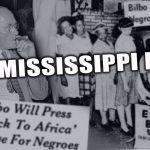
Lynching in Mississippi wasn’t just about racial hatred—it was about economic control. The myth that lynching was a response to crime collapses when we look at the real targets of white mobs: Black landowners, entrepreneurs, and professionals. Time and again, Black people who managed to gain economic independence were met with violence. Their businesses were destroyed, their land stolen, and their lives taken.
Why Economic Success Made Black People a Target
During Reconstruction, Black communities made remarkable economic strides. Formerly enslaved people built farms, businesses, and institutions despite systemic discrimination. Some even became wealthy, threatening the rigid racial hierarchy that white supremacists sought to maintain.
To white landowners and business elites, a successful Black population posed a direct threat. Economic independence meant Black people could challenge the status quo, support civil rights efforts, and refuse exploitative labor conditions. If Black people no longer depended on white employers or landlords, the system of racial subjugation would weaken. White mobs used lynching as a tool to terrorize Black business owners and landholders into submission.
Mississippi’s War on Black Landowners
Mississippi led the nation in lynchings, and many of its victims were not accused criminals but successful Black farmers and businessmen. Throughout the state, white mobs targeted prosperous Black men who had managed to accumulate land or wealth. Some were lynched under the pretense of fabricated crimes; others were outright murdered simply because their success angered their white neighbors.
For example, in Leflore County, Black farmers affiliated with the Colored Farmers’ Alliance sought to become economically self-sufficient. White landowners saw this as a direct threat. In 1889, nearly 25 Black farmers were massacred, their organization dismantled, and their lands taken over by white elites.
The Pattern: How White Mobs Stole Black Wealth
Lynching was often the final act in a broader campaign of economic suppression. The process usually followed a pattern:
- Black success drew resentment. A Black farmer, shop owner, or business leader would be seen as “getting too successful.”
- False accusations were made. The individual would be accused of a crime—often assault, theft, or disrespecting a white person.
- The lynching was carried out. A white mob would seize the person, often with the complicity of local law enforcement.
- Land and property were stolen. After the lynching, the victim’s land or business would often be taken by local white elites. In many cases, no legal records existed for these transfers, as they were simply seized through terror.
Beyond Mississippi: A National Strategy of Economic Terror

While Mississippi had the highest number of economic-based lynchings, this pattern was repeated across the South and beyond.
- In 1916, Anthony Crawford, a wealthy Black cotton farmer in South Carolina, was lynched after he refused to sell his crops at a lower price to white buyers. His family was forced off their land, and his property was stolen.
- In 1921, the Tulsa Race Massacre destroyed the thriving Black business district of Greenwood, known as “Black Wall Street.” Hundreds of Black residents were killed, and their businesses burned to the ground.
- In 1946, two successful Black couples—George and Mae Murray Dorsey, and Roger and Dorothy Malcom—were lynched in Georgia. Their deaths came amid white fears that Black landowners were gaining too much influence in the region.
The Long-Term Consequences of Economic Lynching
The impact of these lynchings was not just immediate—it had generational consequences. Land and wealth stolen from Black families was never returned. This economic destruction widened the racial wealth gap that persists to this day. Many Black families that had been on the path to generational wealth were forced into poverty, unable to recover from the financial losses caused by racial violence.
Lynching as a Business Strategy
For many white supremacists, lynching was not just an act of hatred—it was a business decision. By eliminating Black economic competitors, white elites ensured their own dominance in agriculture, trade, and industry. They used terror to monopolize power and keep Black people locked into a cycle of economic dependency.
The story of lynching in America cannot be told without acknowledging its economic motivations. Mississippi and other states led a campaign of racial violence that wasn’t just about enforcing segregation—it was about crushing Black progress. The effects of this campaign are still felt today, and the struggle for economic justice remains unfinished.