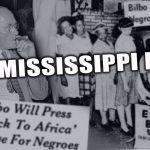
Justice is supposed to be blind, but under Jim Crow, the courts had their eyes wide open—always watching, always protecting white supremacy. Black victims never stood a chance in a system that was never meant for them. The trials, the juries, the legal arguments—all of it was a performance, designed to maintain the racial order rather than deliver real justice.
For white defendants, the courtroom was a shield. It was where their crimes could be excused, downgraded, or outright ignored. For Black victims, it was a trap—one where the truth didn’t matter, where their pain was dismissed, and where their attackers walked free.
This is the story of how Jim Crow’s legal system was built not to serve justice, but to protect the power of whiteness.
The Courtroom as a Performance
Trials are supposed to be a search for truth. But in Jim Crow’s America, trials involving Black victims were rarely about finding justice—they were about reinforcing racial hierarchy.
When white men stood accused of crimes against Black people, their trials were often performative rituals, meant to give the illusion of fairness while ensuring a predetermined outcome. Even when trials happened at all, they were often mere formalities, where judges, juries, and prosecutors all worked toward the same goal—protecting white men from real punishment.
Take the case of Lula Mae Artes. She reported her assault immediately, her attackers were identified, and some even confessed. Yet when the case went to trial, the jury refused to convict them of rape. Instead, they settled on the lightest charge possible—a misdemeanor.
The same courts that rushed to convict Black men on the flimsiest accusations hesitated when white men were on trial. And when a guilty verdict was unavoidable, judges often intervened to lessen the blow—reducing sentences, granting pardons, or finding legal technicalities to erase consequences.
Sometimes, these trials were designed to send a message. When Black men were accused of crimes against white women, the process was swift and merciless. The Martinsville Seven, accused of raping a white woman, were sentenced to death within days of their arrest. There was no careful deliberation, no real attempt at justice—only the certainty that Black men would pay with their lives, whether they were guilty or not. Yet, when two white police officers in Richmond, Virginia, raped a Black woman, they were sentenced to only seven years. The difference was not the crime—it was the race of the accused.
The courtroom was not a place of truth-seeking. It was a place of power-seeking. A space where white supremacy was upheld, case after case, year after year.
Symbolic Convictions: Justice on Paper, Injustice in Practice
Even when white men were convicted of crimes against Black victims, the sentences were rarely meaningful. Many were purely symbolic, meant to calm public outrage without truly punishing the guilty.

In 1959, four white men in Florida kidnapped and raped a Black woman named Betty Jean Owens. Unlike most cases, the men were actually convicted of rape. But what was celebrated as a landmark case wasn’t true justice. The men were sentenced to life in prison—a rare outcome in a legal system that almost never held white men accountable for sexual violence against Black women.
However, despite their life sentences, all four men were paroled by the late 1960s, with some going on to commit further crimes. This was not an exception—white men convicted of crimes against Black victims often had their sentences quietly reduced or overturned, ensuring that their punishment was temporary rather than permanent.

This was a well-worn strategy. Even when courts sentenced white men harshly, the legal system found ways to protect them. In one 1960 case, an all-white jury sentenced a white man, L.J. Loden, to death for raping a Black girl. But the judge refused to accept the sentence, recalled the jury, and forced them to recommend mercy—resulting in a life sentence with parole eligibility in ten years. Even when juries defied expectations, the system intervened to preserve the racial order.
Cases like Owens’ were exceptions, but even when they happened, they didn’t signal a shift toward equality. Instead, they were strategically used to give the illusion that justice was possible. Officials could point to these rare convictions as evidence that the courts were fair, while in reality, the legal system remained unchanged—still overwhelmingly protecting white perpetrators and denying justice to Black victims. These cases did not represent a break from white supremacy; rather, they were carefully managed exceptions designed to defuse public outrage while keeping the overall system intact., while countless Black women’s cases were ignored or thrown out.
The Role of Judges and Prosecutors in Protecting White Defendants
It wasn’t just all-white juries that ensured Black victims never saw justice. Judges and prosecutors played their part too.
- Judges often gave lenient sentences to white men convicted of attacking Black people, ensuring they served little to no time.
- Prosecutors deliberately avoided charging white men with serious crimes when Black victims were involved. They framed cases in ways that encouraged acquittals or lesser sentences.
- Grand juries refused to indict white attackers, blocking cases from ever reaching trial.
This was how justice was controlled before cases ever made it to trial. When a Black woman accused a white man of rape, a grand jury could simply refuse to indict, ensuring that the case never moved forward. This happened in Recy Taylor’s case, even after a suspect confessed to the crime. The legal process never even began.
In cases where Black men were accused, however, grand juries wasted no time in issuing indictments. The Mack Ingram case is a prime example. Ingram, a Black farmer, was sentenced to two years of hard labor for staring at a white girl from 75 feet away. The legal system didn’t just work against Black people—it was weaponized to reinforce racial control.
The goal was not just to protect individual white men—it was to protect the entire racial hierarchy by ensuring that white violence against Black people carried no real consequences.
Why This Still Matters
The myth of justice under Jim Crow wasn’t just about individual trials—it was about an entire system built to maintain white dominance through legal means.
Jim Crow’s courtrooms weren’t broken. They weren’t failing. They were doing exactly what they were designed to do—ensuring that white supremacy remained the law of the land.
This is why we must continue telling these stories. Not because justice was served, but because it wasn’t. Not because these trials were fair, but because they were never meant to be.
Jim Crow’s legal system was a farce. It was never about fairness, truth, or justice. It was about control. Black victims were never meant to win in these courtrooms. White defendants were never meant to lose.
And yet, these stories must be told—not because justice was done, but because it wasn’t. Because the myth of justice is one that must be shattered. Only then can the truth be fully known.
Learn More About These Cases
These stories are part of a larger history of racial terror in America—one that cannot be forgotten. If you want to learn more, we’ve covered these cases in detail in our in-depth video series. Check them out to see the full scope of what happened and why it still matters today. Understanding history is key to preventing its repetition, so we encourage you to watch, share, and continue the conversation.