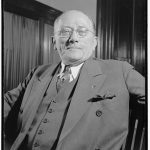
In 1961, Robert Pierson, an Episcopal minister, was arrested along with fifteen other clergy members for protesting segregation in Mississippi. What began as an act of civil disobedience turned into a landmark Supreme Court case—Pierson v. Ray—that ultimately established the legal doctrine of qualified immunity. Today, this doctrine is one of the most controversial aspects of civil rights and police misconduct law, allowing officers to evade accountability for violating citizens’ rights.
The Freedom Rides and Pierson’s Arrest
The early 1960s were a turning point in the fight for racial justice. James Farmer, director of the Congress of Racial Equality (CORE), launched the Freedom Rides to test Southern states’ compliance with desegregation laws. These rides, intended to challenge segregation in interstate transportation, began peacefully but soon met violent resistance. One bus was firebombed in Anniston, Alabama, while riders on another were brutally attacked in Birmingham.
The Episcopal Church, seeking to correct its past support of segregation, formed the Episcopal Society for Cultural and Racial Unity. This organization sponsored a Prayer Pilgrimage, an integrated bus trip from New Orleans to Detroit. Robert Pierson, who was also the son-in-law of New York Governor Nelson Rockefeller, participated in this pilgrimage.
During their journey, fifteen ministers stopped in Jackson, Mississippi, and deliberately sat in the “Whites Only” section of a waiting room, defying state segregation laws. They were arrested by police captain J.L. Ray and two other officers under a Mississippi law prohibiting gatherings that could provoke a breach of the peace. A local judge, himself an Episcopalian, sentenced them to four months in jail and fined them $200 each, reinforcing the idea that men of the gospel should obey the law—even unjust ones.

The Birth of Qualified Immunity
The convictions of the ministers were eventually overturned, and Pierson sued under Section 1983, arguing that his constitutional rights had been violated. A jury ruled in favor of the officers, prompting the ministers to appeal. The case made its way to the Supreme Court, which ruled in favor of the police, creating the doctrine of qualified immunity.
The Court reasoned that officers should not be held personally liable for arrests made in “good faith,” even if they later turned out to be unlawful. This decision was meant to protect officers from lawsuits if they mistakenly believed their actions were legally justified. However, what started as a safeguard for reasonable mistakes has since expanded into a shield for blatant misconduct.
From Good Faith Mistakes to a Shield for Misconduct
Over the decades, courts have continued to broaden the scope of qualified immunity, making it nearly impossible to hold officers accountable. The doctrine now protects officers from lawsuits unless a prior court ruling explicitly deemed similar conduct unconstitutional. This means that even if an officer acts in bad faith—using excessive force, making false arrests, or engaging in outright brutality—they often escape liability because no identical case has been ruled upon before.
This shift occurred alongside the rise of mass incarceration and the “tough on crime” era of the 1980s. As policing became more aggressive, particularly in communities of color, courts adapted by expanding legal protections for officers. Qualified immunity became a tool not to protect well-intentioned officers from honest mistakes but to insulate law enforcement from accountability.
A System in Need of Change
How did we move from protecting good faith mistakes to excusing egregious misconduct? The origins of qualified immunity show that it was never intended to justify clear abuses of power. Yet today, it serves as a barrier to justice for countless victims of police violence.
What are your thoughts on qualified immunity? Should it be reformed or abolished? The conversation on police accountability is more urgent than ever, and understanding the history of this doctrine is the first step toward meaningful change.